Subscribe to the Hub's Newsletter and stay up to date on the latest news, events and opportunities of the digital health ecosystem.
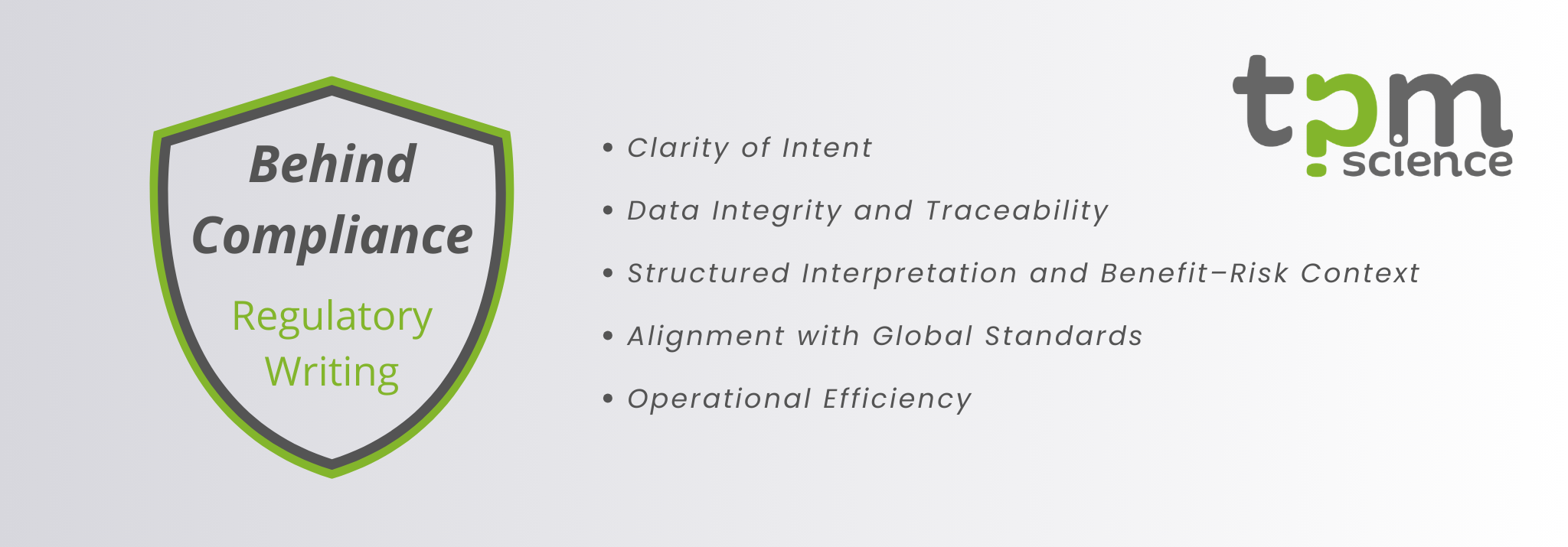


In today’s global clinical development environment, regulatory operations function within a framework defined by the International Council for Harmonisation of Technical Requirements for Pharmaceuticals for Human Use (ICH) and enforced by authorities such as the U.S. Food and Drug Administration (FDA) and the European Medicines Agency (EMA). Within this landscape, documentation quality can directly influence review timelines, the number of clarification requests, and ultimately, regulatory outcomes.
Strong regulatory writing goes beyond compliance checklists. It translates scientific complexity into structured, coherent, and strategically aligned documentation that facilitates efficient assessment.
At its foundation, effective regulatory writing demonstrates clarity of purpose:
Guidelines such as ICH E6(R3) on Good Clinical Practice and ICH E8(R1) on General Considerations for Clinical Studies emphasize quality-by-design principles and the importance of clearly defined objectives and critical-to-quality factors. When documentation reflects these principles, reviewers can more readily understand the scientific rationale underpinning a program.
Regulators expect traceability from raw data to conclusions:
Guidelines such as ICH E3 on Structure and Content of Clinical Study Reports provides a detailed framework for CSR organization, reinforcing the need for structured presentation and internal consistency. Clear cross-referencing and a consistent narrative help streamline the review process and reduce the likelihood of additional information requests.
Data presentation alone is insufficient. Strong regulatory writing incorporates:
Both the FDA and EMA have issued guidance on benefit–risk assessment frameworks, underscoring the importance of clear reasoning in regulatory submissions. A well-crafted discussion section can proactively address concerns, reducing iterative queries during review cycles.
Global submissions demand structural precision. Regulatory documents must adhere to:
The CTD format, adopted across ICH regions, enables harmonized submissions. However, harmonization does not eliminate the need for strategic tailoring. Experienced writers understand how to maintain modular consistency while accommodating regional nuances.
High-quality regulatory writing also delivers operational value:
When writers engage early with clinical, statistical, and regulatory teams, documentation evolves in parallel with the program. This integration supports predictable timelines and mitigates last-minute bottlenecks.
Regulatory Writing as Strategic Infrastructure
For CROs, pharmaceutical sponsors, and investigators, regulatory documentation is not merely a deliverable — it is a strategic interface between scientific development and regulatory decision-making. Clear structure, traceable data, balanced interpretation, and operational discipline collectively strengthen credibility and efficiency. In this environment, partnering with an experienced regulatory writing team becomes a strategic advantage.
At TPM Science, the team combines scientific rigor, regulatory insight, and operational efficiency to deliver clear, submission-ready documentation aligned with global standards. By integrating cross-functional expertise with structured, high-quality writing processes, TPM Science supports CROs, pharmaceutical companies, and investigators in transforming complex clinical data into coherent regulatory narratives that facilitate confident review and informed decision-making.
Planning a regulatory submission? Connect with TPM Science to discuss how expert regulatory writing can support your development program: https://tpmscience.eu/contact-us/?whichservice=Papers
References


